Showing posts with label melinda camber porter. Show all posts

Wednesday, November 23, 2016

Melinda interviews Louis Malle for the Paris Post, 1975

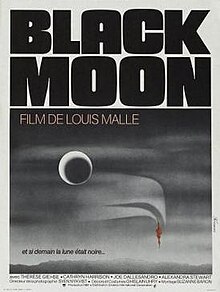
Having completed his 13th and most puzzling film, Black Moon, Louis Malle is still a very young 40 year old. It is no coincidence, he says, that his recent films have all had adolescent heroes or heroines. It seems evident to anyone who has followed his development that he will never give up his restless searching, his self-questioning and his earnestness. Many of his “Nouvelle Vague' friends, with whom he made a startling entry into the cinema, have found a formula and have lived by it, Louis Malle regards each film as a new beginning and challenge.

“The more one goes on in life, the more the past becomes a burden. In my life and films I have always tried to cut off from the past and start again. But each time, it requires greater effort. It is only by breaking with habit that one can get rid of all that is anecdotal. If not, you let a mask come between you and the reality of your situation. It is a protection, like clothes. But it is wonderful to be naked from time to time, and it's also a good idea to change one's clothes of context.”

Read the full article here.

MelindaCamberPorter.com

Wednesday, November 9, 2016

Melinda's interview with Yves Montand, included in Through Parisian Eyes

Montand leaned forward and stared at me rather menacingly. I was impressed by his ability to give a political speech in the privacy of his living room. But I was taken aback when he paused for breath and spoke to me directly. Until that moment I had the feeling that I was sitting in the front row of an auditorium, listening to a politician who was trying to get my vote. 

“Many people think that they will have no talent according to which government is in power. It’s not the government or the political philosophy that gives you talent. You have to have it first. Or you don’t have it. That’s why life is cruel. Life is not roses. Life is hard; you can lose it at any moment, at any age.”

Montand leapt from subject to subject, interspersing English noun and French verbs. I pointed out that he had been unnecessarily bad tempered during the interview, for I had understood what he was saying, but I would have preferred to talk about his acting career and leave politics in abeyance for a while.

“Oh, no. I hope I wasn't unpleasant. Was I? No, let me explain why… You see…there are people who just give any old interview. But I can’t. I give myself completely. I can’t help it, and I can’t do otherwise. It’s a terrible weakness of mine.”


Saturday, November 5, 2016

Melinda in Conversation with Bernard-Henri Levy

Bernard-Henri Lévy (1948 - ) is a French intellectual, media personality, and author.

Bernard-Henri Levy described himself to me, as we sat in his office…with a rather ironical glint in his eyes. I had asked whether the exasperated, passionate tone in his books, like L’Ideologie Francaise and La Barbarie a visage humain, was a tone he adopted, or whether it sprang from his personality:

“I believe it stems from my personality…yes, I’m sure it does… I am a mixture of nonchalance, and I have a taste for the good life, and easeful living, and pleasure on the one hand. And then, on the other hand, I am febrile, furious, frenetic, sectarian, brutal, and violent.”

“And violent?” I asked.

“Yes. I am violent. When I was a young man I would often get into fights. I was quite content to settle an argument with my fists, rather than discussing the issue; I’m not tolerant, absolutely not. I think there’s a contradiction in me, between the self that has a taste for easeful living, and the self that enjoys a fight. I have causes that I fight for with every ounce of determination."

Read the full interview from Through Parisian Eyes [PDF]


 MelindaCamberPorter.com

Thursday, November 3, 2016

Melinda's interview with French novelist Andre Malraux for the The Times

"I wanted to destroy the notion of autobiography. The part of oneself that allows one to say ‘I’ is profoundly irrational", said André Malraux, who has just published Lazare, fragments of the second volume of his Antimemoirs (Gallimard). One day in the autumn of 1972 Malraux collapsed and was taken to the Salpêtrière; two weeks later the doctors diagnosed sclerosis of the peripheral nerves of the brain. He came close to death and encountered an “I-without-self; a life without an identity”. 

He considers the fact that he is sitting, alive and well, in his country-house at Verrières-leBuisson as a resurrection. Although Lazare is inspired by this encounter with death and intermittently treats the personal experience, Malraux uses it primarily as a basis for meditating upon dilemmas that transcend the individual. 

Both in the book and in our conversation he speaks of his personal experience with a wry dismissiveness. “When it happened, the first thing I felt was great surprise, and then a certain irony. I would never have thought that death was of such little importance. But I want to s tress the fact that we must never forget that physical suffering is all-important. For someone who had suffered physical pain it would have been a completely different experience. It was an event, but it was scarcely suffering."

Read the full article from the The Times of London here.

Tuesday, November 1, 2016

Melinda in Conversation with Marcel Ophuls

Marcel Ophüls (1927 - ) is a documentary filmmaker and former actor.

I was aware that Ophuls could appear to be a rather disgruntled man, particularly when he damns certain writers and trends. And yet his tone was good-natured, rather witty, and self-mocking, and he had been encouraged to continue in this vein for I was laughing with him. We began to talk about the ethics of interviewing.

“You do not use individuals’ lives or individuals’ statements or the reflection that they give of themselves as objects or tools. So you do not script in advance. You don’t say, ‘We’re going to see so and so because he’ll tell us about this or that.’ Right? And that’s where the big difference is between making a feature film and a documentary. An actor has been paid to be put into a fictional situation. And paying actors is the least exploitive way of going about making a film. I don’t like documentaries and I often don’t like documentary filmmakers. Nor did my father. For actors are professionals who create an illusion which then tells us something about the truth or reflections of a reality. That’s wonderful.”

Ophuls wanted our conversation to move along freely, without paying attention to the prepared questions. At one point I asked Ophuls whether we should continue talking about the collaboration or move on to another question about documentaries… He went on to tell me about his many discussions with Francois Truffaut on the ethics of filmmaking.

Read the full interview from Through Parisian Eyes [PDF]

MelindaCamberPorter.com